


Endometriosis and infertility: real options for achieving pregnancy
Endometriosis can make pregnancy more difficult, but it doesn’t mean you can’t become a mother. At Clínica Fertia we analyse your case and help you find the best treatment.
Highly
complex cases
Personalised
treatment
No
waiting list
Free
initial consultation
How does endometriosis affect fertility?
The link between endometriosis and infertility is common, but it does not always mean pregnancy is impossible.
Endometriosis can affect fertility because:
- it alters the pelvic anatomy
- it hinders embryo implantation
- it can affect egg quality
Many women come to the clinic with the same question:
“Will I be able to become a mother with endometriosis?”
The answer depends on the severity and stage of the condition, but there are real options.
How does endometriosis affect egg quality
In some cases, endometriosis can affect the ovarian environment and reduce oocyte quality.
This can result in:
Lower fertilisation capacity
Lower embryo quality
Lower implantation rate
Although not all women with endometriosis experience a decline in oocyte quality, the chronic inflammation associated with the condition can affect both the quantity and the quality of the eggs, particularly in more advanced cases. For this reason, following a diagnosis of endometriosis in a young woman, the option of preserving her eggs should be considered, given the effect this condition may have on her ovarian reserve.
Why can endometriosis make pregnancy more difficult?
Endometriosis does not affect all women in the same way. Some achieve pregnancy spontaneously, while others may find it more difficult to conceive due to various factors related to the condition.
Altered ovarian reserve
The presence of ovarian endometriomas and certain previous surgical procedures can reduce ovarian reserve, decreasing the number of available eggs and, in some cases, accelerating their decline over time.
Chronic pelvic inflammation
Endometriosis creates an inflammatory environment that can affect the normal functioning of the ovaries, the fallopian tubes and the fertilisation process, making it harder for the egg and sperm to meet.
Impaired embryo implantation
Some women with endometriosis experience changes in the endometrium that can affect uterine receptivity and hinder embryo implantation, even when embryo quality is adequate.
Associated adenomyosis
Adenomyosis is frequently associated with endometriosis and can influence both implantation and the course of pregnancy, increasing the risk of implantation failure or early miscarriage in certain cases.
Anatomical abnormalities and adhesions
Pelvic adhesions and involvement of the fallopian tubes, ovaries or pelvis can alter the normal reproductive anatomy and make natural pregnancy more difficult.
Impact on oocyte quality
Various studies suggest that the inflammation associated with endometriosis may influence egg quality and embryo development, particularly in moderate or severe cases.
That is why, when we talk about endometriosis and fertility, there is no single answer that applies to all patients. At Clínica Fertia we carry out an individualised assessment to identify which factors are influencing each case and to design the most appropriate reproductive strategy.
We study endometriosis from different angles
Endometriosis can affect fertility in very different ways in each woman. That is why, as well as assessing the condition itself, we analyse other factors that may influence embryo implantation, egg quality or the course of the pregnancy.
Our aim is to understand what is happening in each case in order to design the most appropriate strategy and increase the chances of success.
1. Advanced diagnostic imaging
- Specialised ultrasound
- Assessment of adenomyosis
- Lesion mapping
2. Receptivity and implantation
- ERA / ER-Map test
- Implantation window
- Personalised embryo transfer
3. Microbiome and inflammation
- EMMA test
- ALICE test
- Immunohistochemistry: screening for chronic endometritis
4. Immunological assessment
- Systemic immunological assessment
- KIR-HLA-C
- Endometrial immune balance
Specific treatment protocols: action plan
An action plan is drawn up for each case:
Various studies recommend treatment with GnRH agonist analogues, either prior to the use of assisted reproduction techniques or in frozen embryo transfer cycles, where the use of analogues promotes ovarian rest and reduces the volume of the lesions, thereby achieving a positive impact on the endometrial microenvironment and uterine receptivity, which helps to improve live birth rates.
For these patients, our centre applies a specific pre-treatment with an anti-inflammatory diet and adjuvants in order to improve the response to stimulation, together with a deferred transfer strategy using GnRH analogues, as well as antioxidants and probiotics that help improve endometrial receptivity in these patients.
A specific progesterone regimen is also developed in these cases, given the greater resistance to progesterone that these patients present.
Recently, GnRH antagonist analogues have begun to be used successfully; they are characterised by their ability to reduce the size of endometriotic lesions within a short period of time. The use of letrozole has also been described, an aromatase inhibitor that prevents the synthesis of oestradiol in endometriotic foci, with good results in terms of pregnancy rates, particularly in the most severe cases.
Fertility treatments for endometriosis
The most common option in moderate or severe cases.
Indicated when egg quality is compromised.
An individualised strategy based on the severity of the endometriosis.
Does endometriosis surgery improve fertility?
In some cases, surgery can help improve the conditions for pregnancy. The indications are very specific:
- In very severe cases with large endometriomas that make egg retrieval impossible
- Presence of hydrosalpinx
- Patients with involvement of either the bowel or the urinary system
- Intractable pain that does not respond to medical treatment
Surgery in these situations is necessary but is never the first-line option.
At Clínica Fertia we assess each case individually, taking into account age, ovarian reserve, the extent of the condition and the possible presence of associated adenomyosis. We have a nutritional counselling unit as well as psychological support, which will make your journey to motherhood easier.
Endometriosis and motherhood: pregnancy is possible
Having endometriosis can make the journey to pregnancy more complex, but it does not mean it is impossible.
Many patients come to the clinic thinking that endometriosis means they will not be able to become mothers. However, with a proper diagnosis and a personalised strategy, there are various options to increase the chances of pregnancy.
At Clínica Fertia we assess each case individually, taking into account age, ovarian reserve, the extent of the condition and the possible presence of associated adenomyosis.
Because every story is different, so too must be the strategy to help you fulfil your wish to become a mother.

Specialists in highly complex fertility and endometriosis
Endometriosis is a complex condition that can affect fertility in many ways: ovulatory disturbances, pelvic inflammation, involvement of the fallopian tubes, changes in endometrial receptivity or associated adenomyosis.
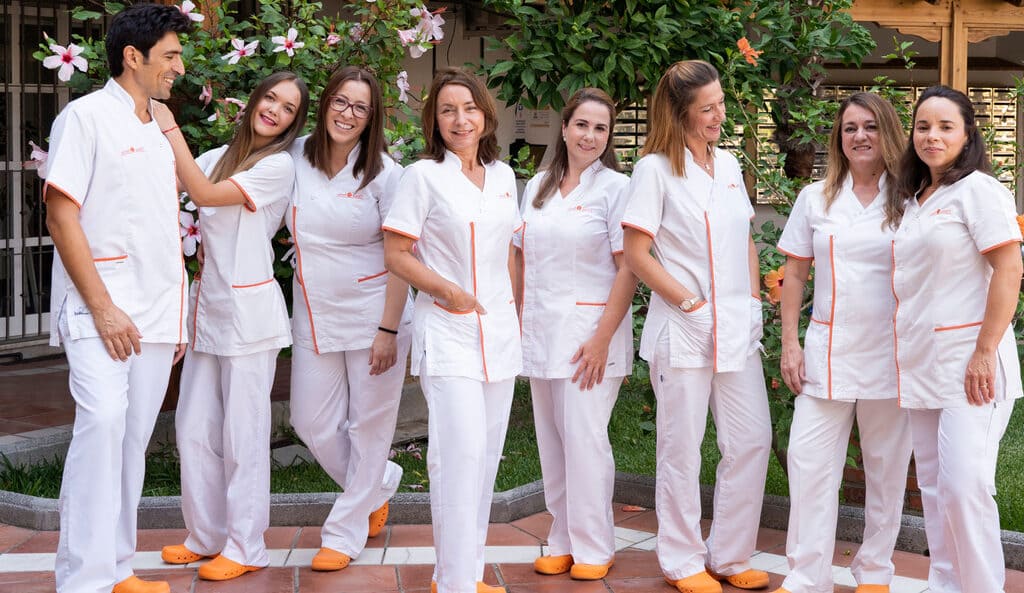
That is why Dr Elena Puente and her team approach each case from an integrated perspective, studying not only the condition itself, but also its real impact on ovarian reserve, egg quality, embryo implantation and the chances of pregnancy.
At Clínica Fertia we combine advanced ultrasound, ovarian reserve testing, implantation analysis and personalised reproductive planning to design a strategy adapted to the age, diagnosis and reproductive wishes of each patient.
Our aim is not only to achieve a pregnancy, but to do so in the shortest possible time and while preserving the best future reproductive options.
Best fertility clinic for endometriosis
Choosing a clinic specialising in complex cases is key.
Our team studies factors such as ovarian reserve, endometrial receptivity, the uterine microbiome, the inflammation associated with the condition and the possible presence of adenomyosis in order to design a personalised reproductive strategy.
- We analyse each case individually
- We work with treatments adapted to endometriosis
- We support the patient throughout the process

The sooner you have a clear diagnosis, the more options you’ll have.
Posts from our blog on endometriosis
Frequently asked questions about endometriosis and infertility
Can I become a mother with stage 4 endometriosis?
Yes, although it can be more complex. In many cases treatments such as in vitro fertilisation are used.
How does endometriosis affect egg quality?
It can affect oocyte quality and embryo development, depending on the severity.
What is the best treatment for endometriosis and infertility?
It depends on the case, but in vitro fertilisation is usually the most common option.
Does surgery improve fertility in endometriosis?
In some cases yes, but it must be assessed individually.
Can you get pregnant naturally with endometriosis?
Yes, but in many cases medical assistance may be required.
What happens with endometriosis during pregnancy?
Many women experience an improvement in their symptoms, although this depends on each case.
When should you go to a fertility clinic?
When there is difficulty achieving pregnancy or a previous diagnosis of endometriosis.
Take the first step towards becoming a mother with endometriosis
We know it isn’t only a medical matter; it’s an emotional one too.
At Clínica Fertia we help you understand your situation and find the best path to achieving pregnancy.