


ROPA Method in Málaga: shared motherhood for female couples
The ROPA method is indicated for female couples in which both women wish to take an active part in the journey to motherhood. One of them provides the eggs (genetic mother) and the other carries the pregnancy (gestational mother).
At Clínica Fertia we support you with a personalised and safe treatment.
Shared motherhood
Personalised treatment
No
waiting list
Free first consultation
What is the ROPA method?
The ROPA method (Reception of Oocytes from the Partner) is an assisted reproduction technique for female couples.
One of them provides the eggs (genetic mother) and the other carries the pregnancy (gestational mother).
In this way, both take an active part in the process.
Because becoming a mother can also be a shared project right from the very first moment.
Assisted reproduction for female couples
This treatment is indicated for:
Female couples who wish to share motherhood, where both women want to be involved in the process.
The ROPA method is one of the most complete options within assisted reproduction.
What is the ROPA method process like?

Normally, a single egg is produced in each natural cycle. Ovarian stimulation consists of administering hormones by subcutaneous injection in order to obtain more eggs. The whole process is monitored by ultrasound scans, for which we are available seven days a week. Depending on the type of protocol used and how quickly the ovary responds, the process will last between 10 and 12 days.
Once the follicles reach the appropriate number and size, a hormone called HCG is administered to complete the maturation of the eggs. Approximately 36 hours after the HCG is given, the mature eggs can be retrieved from the ovary.


Once the eggs have been obtained, they are inseminated with semen from an anonymous donor, previously prepared in the laboratory. Clínica Fertia works with the leading sperm banks in Spain, which allows us to select the donor sample that best matches the physical characteristics (ethnicity, eye colour, hair, height, weight and blood group) of both women. It also offers the option of genetic matching between the sperm donor and the genetic mother
Fertilisation can be carried out by conventional IVF, in which the biologist brings each oocyte into contact with around 25 to 50,000 previously selected sperm and lets fertilisation take place on its own. Or by ICSI, which consists of introducing a single sperm into the cytoplasm of the egg by puncturing it with a fine pipette.
It is usually carried out in parallel with the genetic mother’s stimulation cycle. First we make sure that ovarian activity in the recipient is stopped, for which we normally use contraceptives or a single dose of GnRH analogues, except in women who are already menopausal, in which case it is not necessary.
Next, a replacement regimen with oestrogens is started, either orally or through transdermal patches, to ensure adequate preparation of the endometrium, where the embryos will be placed. During this process one or two ultrasound scans will be carried out to check that the endometrium has reached the desired thickness. This phase usually lasts around two weeks. Then, days before the embryo transfer, progesterone is added to transform the endometrium and make it fully receptive.

It consists of the introduction of the embryos inside the uterine cavity. To do this, a speculum is placed in the vagina and a fine cannula carrying the embryos is introduced; the embryos are deposited in the uterus under ultrasound guidance. This process is quick and painless.
After the transfer we recommend relative rest that day and the following day, and then a return to your usual activity. We only recommend avoiding strenuous effort and sport for the following two weeks. Travelling poses no problem.
It is a process of cellular solidification at low temperatures (-196ºC) which are reached very rapidly, preventing the formation of crystals. Once vitrified, the eggs are stored inside straws using a closed system that prevents them from coming into contact with the liquid nitrogen in which they are immersed for preservation, thus guaranteeing the highest safety conditions.
This can be done by measuring BHCG in the blood 10 days after the embryo transfer.
Or by taking a urine test 14 days after the transfer.
Until confirmation, the medication prescribed on the day of the transfer must be continued.
Fifteen days after the BHCG test, an ultrasound scan is carried out to confirm embryo implantation; the gestational sac can be seen with the embryo inside it, and with a heartbeat present. Sometimes the heartbeat will be visible 7 days later.
Shared motherhood: the value of the ROPA method
One of the main advantages of the ROPA method is that both women take part in:
- Medical check-ups
- Continuous monitoring of both mums
This creates a unique bond right from the start.
Success rate of the ROPA method
The success rate of the ROPA method is similar to that of in vitro fertilisation.
It depends on factors such as:
Age of the genetic mother
Quality of the oocytes
Embryo quality
Legal requirements of the ROPA method
In Spain, the ROPA method is regulated and requires that:
- The couple are married
- Both women sign the consent form
This allows both of them to be legally recognised as mothers.
A safe treatment with full support
The ROPA method is a safe and widely used technique.
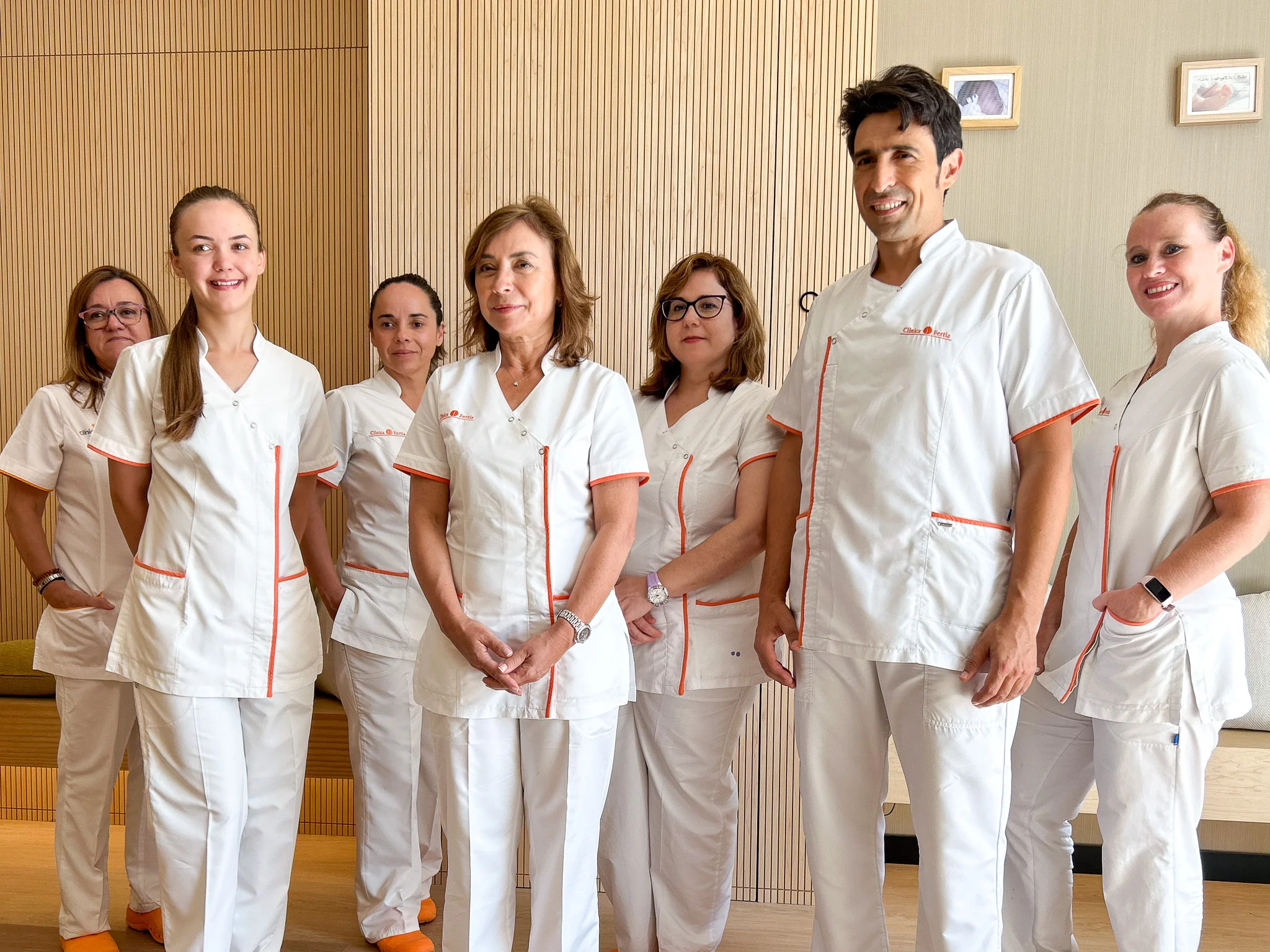
At Clínica Fertia we support every couple throughout the process, adapting the treatment to their needs.
Because it is not only about the result, but about how you live the journey.
Get answers to your questions and find out how to get started.
Frequently asked questions about the ROPA method
Who can access the ROPA method?
It is indicated for female couples in which both women wish to take part in the journey to motherhood.
What is the success rate of the ROPA method?
The success rate of the ROPA method is similar to that of in vitro fertilisation. It depends mainly on the age of the genetic mother, the quality of the oocytes and the condition of the gestational mother’s uterus.
What is the ROPA method process step by step?
The process includes: ovarian stimulation of the genetic mother, retrieval of the oocytes by egg retrieval, fertilisation with donor sperm, embryo culture in the laboratory and transfer to the uterus of the gestational mother, suitably prepared to receive the embryo.
What legal requirements does the ROPA method have in Spain?
For both women to be registered as mothers in the Civil Registry, they must previously be married to each other or be registered as a civil partnership. In this way, both women will have the same legal rights and obligations regarding the baby born through ART (Assisted Reproduction Techniques) and the child will be registered as the child of both mothers.
Is donor sperm used in the ROPA method?
Yes, medically screened and selected donor sperm is always used.
Who provides the genetic material in the ROPA method?
The woman who provides the eggs is the genetic mother. However, her partner will also influence the expression of that genetic material through epigenetics, which means that both take an active part in the baby’s development.
Start your shared motherhood journey
At Clínica Fertia we help you take the step with a treatment adapted to you both.
Two paths that come together as one.