
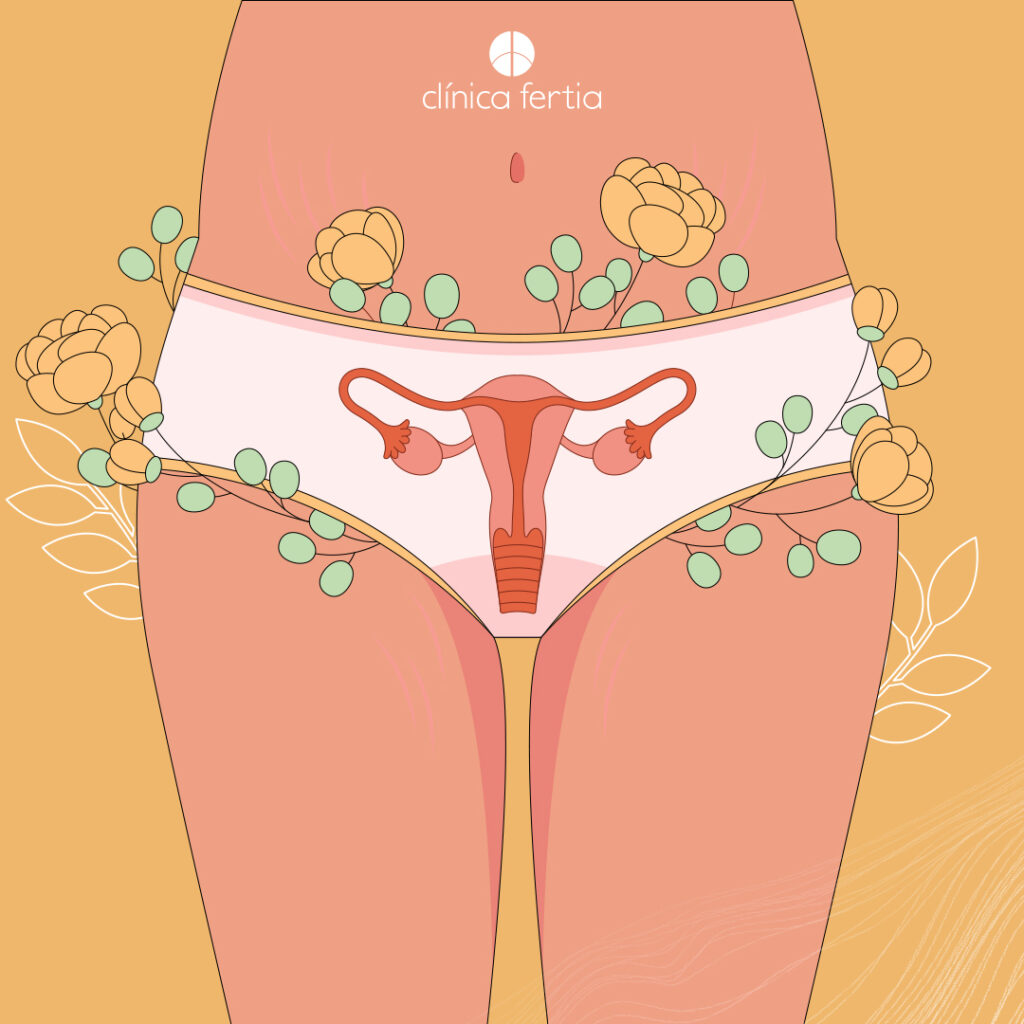
Can the vaginal microbiota affect your chances of getting pregnant? In this article, we explain some of the latest research on the relationship between the microbiome and fertility.
You will learn what the vaginal microbiota is, how imbalances in this bacterial ecosystem can affect reproductive health, and what can be done to restore a healthy microbiome and improve fertility outcomes.
What is the microbiota?
Recent advances in medicine have highlighted the importance of the beneficial bacteria that naturally live in our bodies, collectively known as the microbiota. These microorganisms perform essential functions, including protecting us against harmful pathogens, supporting the development and regulation of the immune system, helping digest nutrients and producing certain vitamins.
The term microbiome refers to the complete collection of genetic material belonging to these microorganisms.
Within the female reproductive tract, the vagina is predominantly colonised by Lactobacillus species. When the normal balance of the vaginal microbiota is disrupted—a condition known as dysbiosis—it may contribute to infertility, recurrent implantation failure and an increased risk of preterm birth.
For this reason, there is growing scientific interest in understanding the reproductive microbiome and developing therapies capable of restoring a healthy bacterial balance.
How can changes in the normal microbiota affect fertility?
Bacterial vaginosis is characterised by a reduction in Lactobacillus bacteria and an overgrowth of anaerobic bacteria within the vagina. It has been associated with subfertility, infertility, an increased risk of sexually transmitted infections, ascending infections affecting the fallopian tubes and a higher risk of preterm birth.
Women undergoing assisted reproductive treatment are more likely to achieve pregnancy when their vaginal microbiota is dominated by Lactobacillus species.
Research by Dr. Irene Moreno has also shown that endometrial dysbiosis is associated with recurrent implantation failure, miscarriage and infertility.
In addition, chronic endometritis—an inflammation of the endometrial tissue caused by an imbalance between the endometrial microbiome and the local immune system, often related to bacteria or viruses—has been linked to implantation failure and recurrent pregnancy loss.
Studies have also shown that women whose vaginal microbiota is not dominated by Lactobacillus species and instead contains a high diversity of bacteria have a greater risk of preterm birth. This type of microbiota is more commonly found in Black women, who have a higher rate of preterm delivery than Caucasian or Asian women.
There is also a strong association between bacterial vaginosis before pregnancy and preterm birth, mainly because pathogenic bacteria can ascend into the uterus, triggering inflammation responsible for approximately one-third of all preterm births.