
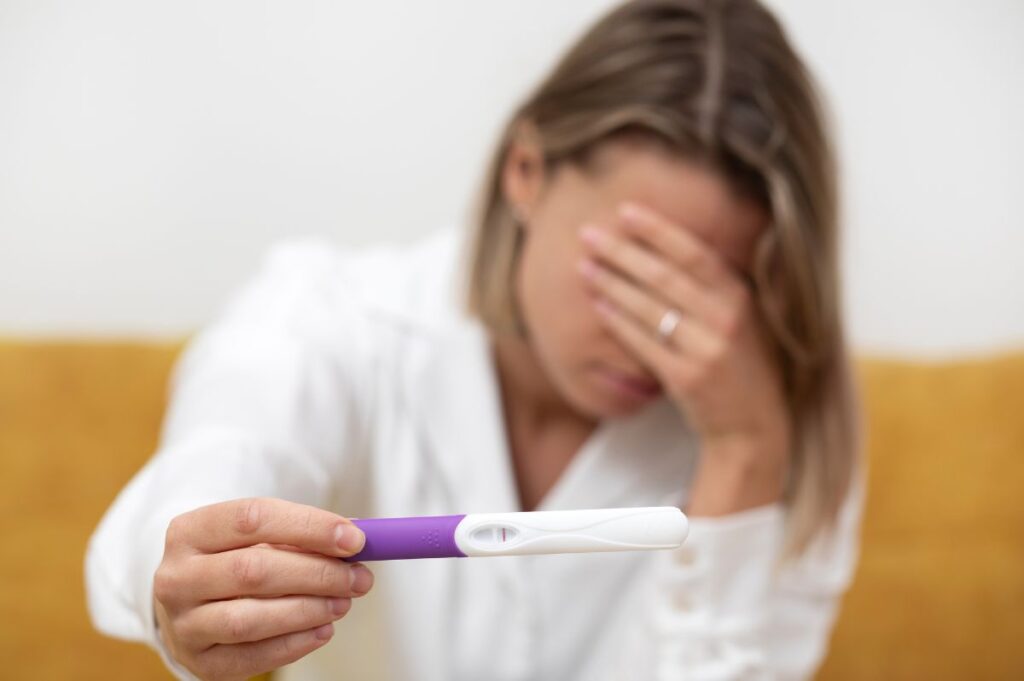
Quite often, patients with normal gynecological check-ups, good general health, and a healthy lifestyle wonder why they aren’t getting pregnant despite everything seeming to be in order. At Clínica Fertia, this is one of the most common questions we hear, especially from women who have decided to pursue motherhood at a later stage of their reproductive life.
Biological age and fertility: what you can’t see
Even when test results and check-ups look fine, the age factor carries significant weight. From age 35 onward, egg quality begins to decline, and the likelihood of chromosomal abnormalities increases considerably. This can lead to:
- Eggs that can’t be fertilized
- Embryos with chromosomal abnormalities
- Non-viable pregnancies or early miscarriages
Ovarian reserve, and especially the genetic quality of the eggs, is affected by the passage of time, even in women with a healthy lifestyle and no visible gynecological conditions.
Reproductive genetics: the role of the karyotype
Each egg and sperm contribute half of the genetic information needed to form a healthy embryo: 23 chromosomes each, which together make up the 23 pairs that form our karyotype. When there’s an error in this division (for example, an extra or missing chromosome), fertilization can fail or result in a non-viable pregnancy.
Some of the most common abnormalities linked to this phenomenon are trisomies, such as Down syndrome. However, there can also be errors in gene expression without any numerical abnormality. This is where epigenetics comes into play.
Epigenetics: beyond DNA
Epigenetics studies how external factors can change the way genes are switched on or off, without altering the genetic sequence itself. In other words, the DNA stays the same, but how it’s read and applied can vary depending on the context.
Factors that influence the epigenome
- Diet and nutrition
- Exposure to toxins such as tobacco, alcohol, or pollutants
- Moderate physical exercise
- Biological age
For example, a diet rich in antioxidants or certain nutrients (such as methyl groups) can help regulate DNA function. On the other hand, poor habits or aging can disrupt the mechanisms of gene activation.
Consequences for fertility and embryonic development
Epigenetic changes affect not only eggs and sperm, but also the embryo and placenta. This can have an impact on the course of the pregnancy, the health of the newborn, and even long-term psychological aspects.
Interestingly, even in cases of egg donation, similarities have been observed between mother and child that can be explained through epigenetics. The uterine environment, biochemical signals, and maternal molecules also play a role in shaping the embryo’s genetic expression.
When pregnancy doesn’t happen, there’s much more to check
Even when test results look “normal,” ovarian age, genetics, and epigenetics are fundamental elements that must be taken into account. At Clínica Fertia, we approach every case from a comprehensive, personalized perspective, assessing not only the visible factors, but also those that operate at the cellular and molecular level.
Because when “everything seems fine,” what matters is knowing where to look and how to act.